


The film is produced as part of project BG-RRP-11.020-0171-C01 – “The Humor of Bulgaria – History and Character of Bulgarian Comedy”, funded by the European Union through the NextGenerationEU instrument.
The documentary film project on Bulgarian comedy involves carefully selected individuals who have direct relevance to the subject and possess in-depth expertise in the field. This includes established artists, researchers, cultural experts, historians, and professionals from the performing arts, whose experience and knowledge contribute to building a credible and meaningful narrative. Their contribution is focused on providing facts, analyses, and interpretations that enrich the presentation of the development of Bulgarian comedy.
The participation of these experts makes it possible to highlight key moments and important stages in the history of the genre, as well as to emphasize significant aspects of its evolution across different periods. Through the sharing of knowledge, personal experience, and professional insight, a deeper and more multifaceted perspective on the role of comedy in cultural life is created. This ensures a high level of authenticity and contributes to the overall quality and value of the documentary film.
Individuals Involved in the Project
- Dr. Nadezhda Alexandrova
Assoc. Prof. Dr. Nadezhda Alexandrova is a lecturer at Sofia University, where she teaches courses related to Bulgarian Revival literature, the Balkan dimensions of Revival culture, as well as topics in gender studies and the history of emotions in literature from this period. Her research focuses on Bulgarian and Balkan literature within the context of the Ottoman Empire, combining literary studies with broader cultural and social approaches.
She is the author of two monographs and numerous academic publications. Her first book examines the “women’s question” in Bulgarian Revival literature, while her second explores the interaction of literary motifs and the transfer of ideas within the Ottoman Empire during the Tanzimat period. Her academic development includes specializations in Budapest, Bucharest, Istanbul, and Cologne. In addition to her teaching and research work, she is actively involved in academic life as an associated member of the Centre for Advanced Study in Sofia, a board member of the Bulgarian Society for Eighteenth-Century Studies, and a member and chair of editorial boards of international academic publications.
- Slavi Ganev
Slavi Ganev is a Bulgarian translator and editor who primarily focuses on adapting classical works and folklore texts. His work is distinguished by a strong respect for the original material and a commitment to preserving its spirit, while making it more accessible to contemporary readers. He has established himself in literary circles through his ability to combine clarity of language with academic precision.
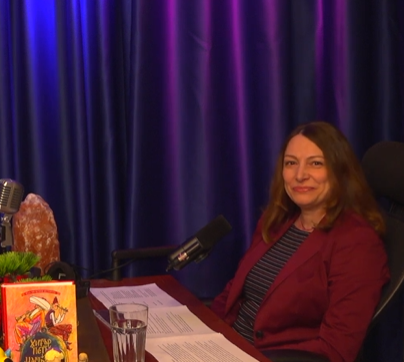
Ganev has also contributed to the compilation of a collection of stories about Hitar Petar, featuring well-known folk tales that highlight the wit and humor of this iconic Bulgarian character. Through careful adaptation and editing, the texts are presented in an engaging and accessible way, while preserving the essence of the folklore tradition.
In his professional career, Ganev is behind the translation of notable works such as Dracula by Bram Stoker, The Monk by Matthew Gregory Lewis, The Girl Who Loved Tom Gordon by Stephen King, and Fevre Dream by George R. R. Martin. He has also participated in compiling and translating collections of Bulgarian folk tales and popular folklore stories, including those about Baba Marta, Hitar Petar, and Nasreddin Hodja. His editions have been published by Deja Book and other publishing houses.
His style is characterized by clarity, accuracy, and respect for tradition. He works with classical, gothic, and contemporary literature, as well as folklore, aiming to present them in a way that is relevant and accessible to modern audiences. Through his work, Slavi Ganev contributes to the promotion of world literature in Bulgaria and to the preservation and transmission of cultural heritage.
- Rumen Somov – Descendant and Relative of Bay Ganyo
Rumen Somov is a relative and descendant connected to the literary character Bay Ganyo, which directly links him to one of the most iconic figures in Bulgarian culture. His family connection to this emblematic character provides him with a unique perspective on the historical and cultural context in which the figure was created, as well as on its significance and impact within Bulgarian society.
- Viktor Topalov
Viktor Topalov is one of the authors of the book “Bohemian Sofia: Stories from the Yellow Cobblestones”—a publication that takes readers back to the spirit and atmosphere of the capital at the beginning of the 20th century. Through his contribution to the collection, he helps present intriguing stories, notable personalities, and iconic places from Sofia’s past, revealing its bohemian character and cultural heritage.
He is also part of the “Bohemian Sofia” initiative—an organization dedicated to promoting the cultural heritage of the capital from the period between the Liberation of Bulgaria and the end of World War II. The team creates educational materials and organizes cultural events related to the city’s history. The initiative began on December 28, 2019, with the creation of a page of the same name, which today is followed by over 60,000 people on social media, united by their interest in Sofia’s past.
- Assoc. Prof. Dr. Petko Hristov
Assoc. Prof. Dr. Petko Petrov Hristov is an established scholar in the fields of ethnology and history, with long-standing contributions to the study of Bulgarian traditional culture. He graduated from the Faculty of History at Sofia University “St. Kliment Ohridski,” where he obtained a Master’s degree in History with a specialization in Ethnography. He continued his academic development with a postgraduate specialization in the Department of Ethnography, and in 1997 he earned his PhD in Ethnology at the Institute of Ethnology and Folklore Studies with Ethnographic Museum at the Bulgarian Academy of Sciences. His dissertation focused on norms of behavior in traditional Bulgarian villages in Central Western Bulgaria at the beginning of the 20th century.
As an editor-in-chief and researcher, he has made a significant contribution to the development of academic studies related to social communication, cultural models, and traditional practices in Bulgarian society.
- Assoc. Prof. Stanoy Stanoev
Assoc. Prof. Stanoy Stanoev presents the first comprehensive monographic study in Bulgarian folklore studies dedicated to the joke as an important part of contemporary oral creativity. His book “The Joke and Its Messages” was published during a period of significant social changes—political, economic, and cultural—which also influenced the way humor is created and perceived. The study traces the development of the joke, from its traditional role in everyday communication to its expansion into media and digital environments.
The author examines the joke not only as a form of entertainment, but as a complex cultural phenomenon that reflects social attitudes and the dynamics of modern society. Through in-depth analysis and an anthropological approach, Stanoev demonstrates how humor reveals key characteristics of contemporary individuals and their culture. He also emphasizes the role of the joke as a means of communication and social connection, highlighting that behind this seemingly light form of expression lie deep social and cultural meanings.